The Tack Geek Presents: English (and English-ish) Stirrups for Hypermobile Ankles

This article was originally written in March of 2023 for an equestrian group on Facebook with a significant number of group members being riders affected by Ehlers Danlos Syndrome, and other hypermobility-related conditions. As many have given me the feedback that this has been incredibly helpful information when it comes to choosing the right stirrup for the chronically ill equestrian, I’ve decided to reproduce my original post here in blog format as well for those who are not active users of social media.


My new HM stirrups arrived this week, so I figured as our resident Tack Geek and also as a hypermobile rider with permanent ankle, knee and hip issues, I’d make a post about my personal experiences finding the right stirrups for my needs. It’s worth noting that yes, a lot of the issues I have are a lot higher than the ankle/stirrup area – but are incurable, therefore I need to find adaptive equipment that allows me to do my best with what I have. I would strongly urge riders to consult with their saddle fitter to ensure their saddle isn’t the cause of any issues, and a physical therapist to address what can be fixed first before looking at adaptive equipment though.

I’ve deliberately not covered other stirrup styles, as I personally only use “English-ish” metal styles so I’m not able to provide first hand experience with those. Another stirrup design I would really like to try as it looks like it would suit my needs is the magnetic open sided Ophena stirrups – I’m actually hoping to trial some later this year, but I’m not comfortable passing comment on the design beyond simple observations until I do have some personal experience with them.

I’m super happy with the new HM stirrups already, and wouldn’t hesitate to recommend them to other riders with joint problems. I’ve been playing around with the idea of eventually creating a “tack library” of sorts for adaptive equipment – like the bit banks who allow you to rent and trial equipment, so you can then buy the same model with confidence since you know from your trial that it will work for you and your horse. There’s not much around in the way of adaptive equipment, and near impossible to try before you buy currently.
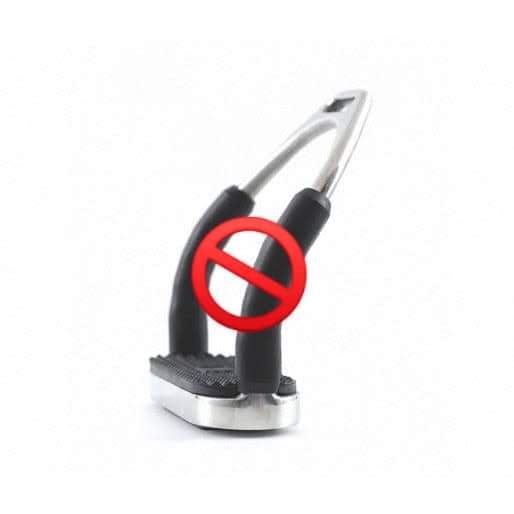

Flex stirrups? No thank you! Of course, everyone has individual needs – but as a hypermobile rider I have personally found the flex style to be the very worst style for my needs.

These actually destabilised my lower legs significantly, and caused me to brace with my leg in an attempt to compensate and create some semblance of stability, and send my feet forward in a chair seat. While I’ve never had a perfect lower leg, I had almost no leg control whatsoever when using these, and had to drop my stirrups for improved stability instead.


The Heather Moffet Wise Tread Stirrup
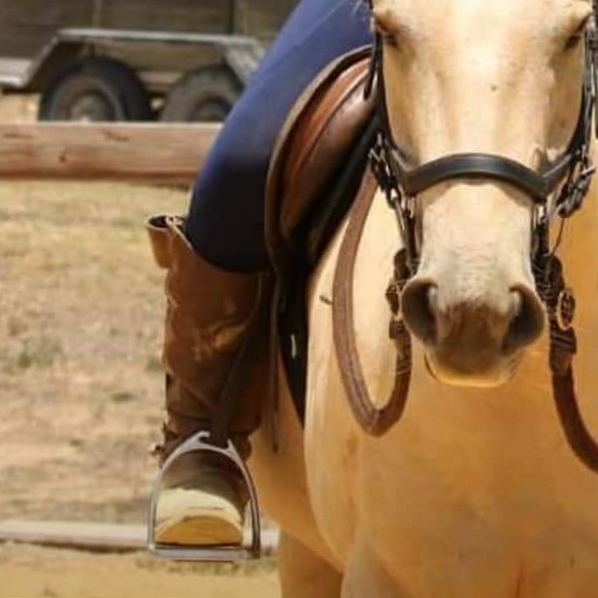
Testing out my HM Wide Tread stirrups for the first time – I also had a badly injured ankle at the moment so I figured this was actually the best possible time to test out an “ankle relief” style stirrup.

Please note: this is not my horse or saddle, hence my leg being jammed by the excessive knee block which has been positioned for a shorter rider. Rider saddle fit is another extremely important factor for the spoonie rider to consider, and I’ll be featuring a similar post on saddles soon.
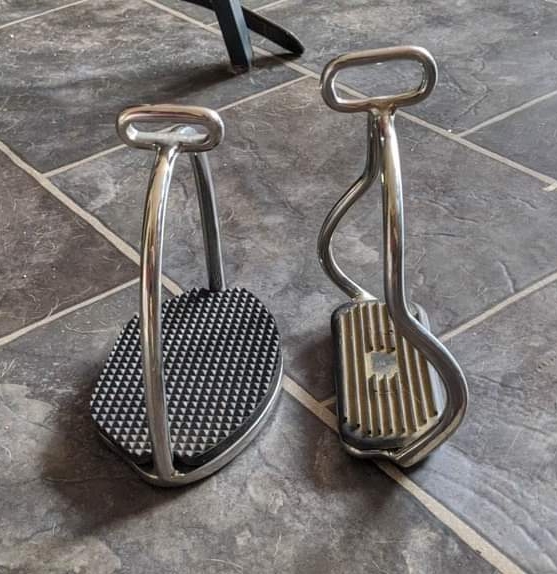
HM Wide Tread on left, Icelandic on right. These styles both work well for my needs due to the 90° top. The Icelandic style can also be used as a safety stirrup of sorts – they were my stirrup of choice when training my last horse with neurological issues.

I believe the HM stirrups are legal for English competition, but Icelandic stirrups are not. The HM are significantly heavier than the Icelandics, which can help provide additional stability to the rider – surprisingly though, they weigh the same as the standard MDC irons. I imagine they would be lighter than the wide tread MDC variety.

Icelandic stirrups also have the benefit of being very affordable – I actually got mine as a free sample from my bit maker, but they can typically be found for around $40-$80 AUD. They are very, very lightweight – weighing less than even a plain traditional Fillis stirrup, which may cause some leg instability for a rider with reduced leg control.

The HM stirrups have just gone up in price to £80, but even factoring in international shipping, they are still relatively affordable compared with other relief style stirrups currently on the market.
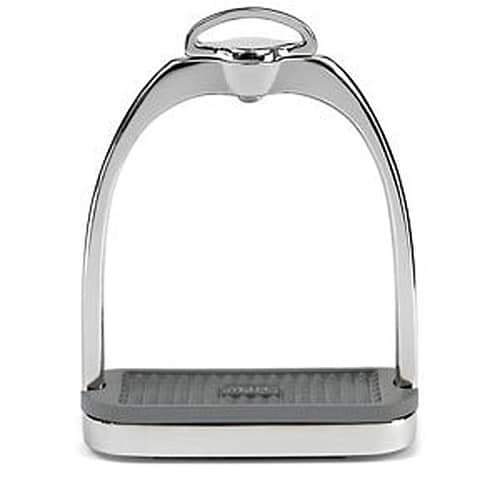
Standard MDC stirrup – the top section can be set at 0° (pictured), 45° or 90°MDC also have a wide tread model, though I have not tried the wide model. They have an advantage of being one of the most traditional looking of the modern tech stirrups, but are very cost prohibitive. I’m aware that cost can be a huge factor for people dealing with chronic pain, which is one of the factors that need to be considered when choosing a piece of adaptive equipment such as stirrups.

I do not personally own this style, but two horses I ride regularly both have these on their saddles. I do like them well enough, but I personally don’t love the price point – and I feel like I can get my physical needs met with more affordable styles. That said, I’ve also included two styles that are even more expensive, but I feel have more to offer feature wise in comparison.


Traditional Fillis stirrups, which my body hates passionately. I’ve included this only for context with the next photo – by replacing the flat tread with the wedge tread (next photo), you can mimic the effect of the offset Fillis style (previous photo) for the very low cost of replacing the treads ($10-15 AUD).

It’s an easy and extremely affordable way to see if an offset stirrup will help reduce your joint pain in the saddle – if the wedge tread helps, then you can confidently invest in a pair of the offset Fillis stirrups, or try the 90° top offset as they provide relief in similar ways.
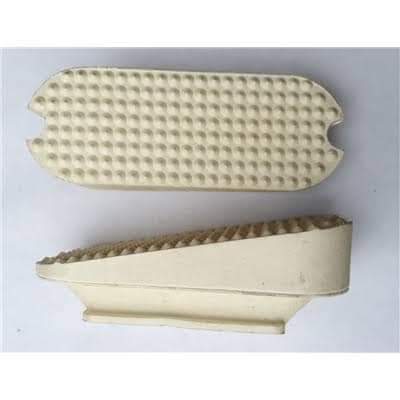
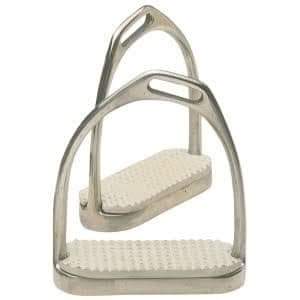
Wedge treads, to be used with regular Fillis stirrups (previous photo)

Offset Fillis style stirrups – these have the advantage of looking very traditional while still offering ankle relief. This was actually the first “relief” style of stirrup that I tried, and it was honestly life changing to be able to still walk after more than a few minutes in the saddle (my ankles would collapse and sublux while mounted previously).
Offset Fillis Stirrups in action – pay close attention to the angle of the tread, this allows me to keep my ankle in a neutral position which offers stability to my incredibly unstable joints, and significantly reduces my ankle subluxations and pain.

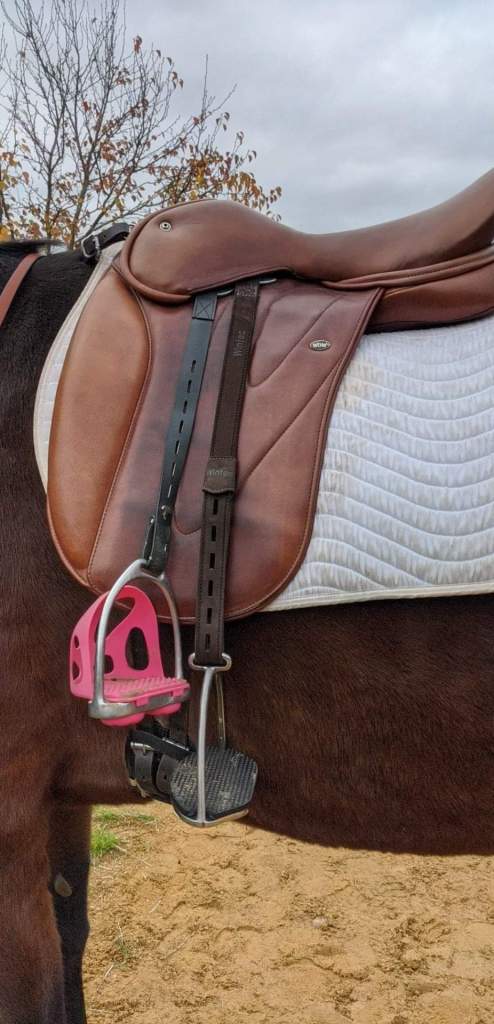
Putting that double stirrup bar to use (my daughters both ride in this saddle as well as me) 😂 Morgan is tall enough that she can use my stirrups on the dressage bar and still achieve a good position, but because Pip is still so small, the jump bar enables her to sit up correctly despite the massively oversized saddle.

Note the position of the stirrup treads, and the position of the leather slot on the offset (pink) stirrup – while the tread isn’t perfectly even like the HM stirrup, you can clearly see how it is at least significantly more even than it would be if it were a regular Fillis stirrup without the offset. I’ll try to remember to take a comparison photo soon showing the offset Fillis versus a regular Fillis stirrup.
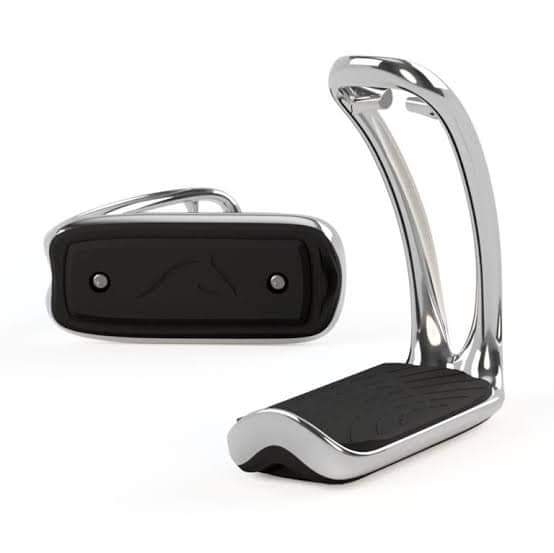
Bonus round – the Ophena magnetic safety stirrup! This is a design I’ve been following for a while, and am very keen to try as I believe it will suit my needs. But that said, I am not comfortable recommending this style personally until I have trialled them myself.

My main concern with this style is the risk of being caught up on a fence or gate while riding past – as the open side makes this more likely than one that is closed on both sides. But I can also appreciate that this open side is a valuable safety feature in the event of a fall

And another bonus round – the Freejump Soft Up Pro Plus! This is a style I’m very keen to try if the new horse is a jumping prospect as I suspect it will suit my needs due to the wide tread and offset for the stirrup leather. I do not currently have personal experience with this design yet, but I recognise it does have some key design features that I have found helpful on other stirrups.

Where to buy?

Note: indicated prices are in AUD, and accurate at the time of publishing (October 2023)

HM Wide Tread Stirrups – $157 AUD https://www.hmsaddles.com/products/hm-stirrup-irons

Icelandic Stirrups – $59 AUD https://www.horsebiz.net.au/equestrian-shop-online/equestrian-and-horse-riding-accessories/stirrups-1/black-double-bend-stirrup-irons

MDC Comfort Stirrups – $359 AUD https://www.ashbree.com.au/mdc-comfort-stirrups/

Wedge Tread for standard Fillis Stirrups – $14.95 AUD https://www.ashbree.com.au/rubber-slanting-stirrup-treads/

Offset Fillis Stirrups – $79.95 AUD https://jamessaddlery.com.au/product/offset-fillis-stirrups/

Ophena S Magnetic Safety Stirrups – from $529 AUD https://ophena.com/collections/magnetic-stirrups-and-accessories/products/ophena-s

Freejump Soft’Up Pro – from $590 AUD https://www.freejumpsystem.com/en/produit/softup-pro-6/
Scoot (Cypher’s Gold) 24.09.2012-14.02.2022

“Enjoy your last walk across the meadow and through the mist. Be not afraid of her for she is your friend.” – the Witcher, Netflix

While I did not own Scoot until 4yo, he was a horse who it seemed was destined to end up with me as we crossed paths again, and again, and again. I was involved in his life in varying professional contexts from birth, and as a result, came to understand him far better than most – I may not have had input in the direction of his life until later, but I was able to observe how his life would come to unfold.

I believe that there are two final gifts that we can offer our horses at the end, when all other options have been tried and failed. The first of these is release – to cease their suffering. The second, to learn what we can from them. To learn better, in order to do better next time.

Scoot was a severely troubled horse. With inconsistent and inadequate training, and an extremely inexperienced owner who should have never been sold a young horse in the first place, it was a recipe for disaster. Factoring in his soundness issues as well, both acquired and genetic, the odds were against him from the very start.

To the less experienced eye, he was a quiet horse – quiet, provided that no pressure was applied. A young horse who needed a firm but fair hand, instead he quickly worked out that his owner did not have the necessary experience and that he could intimidate her into backing off instead of establishing boundaries. As time went on, not only was this behaviour even more firmly established that he was the one calling the shots, but he also became larger, stronger, and more explosive. He may have been young, but he was already becoming an extremely dangerous horse to handle properly.

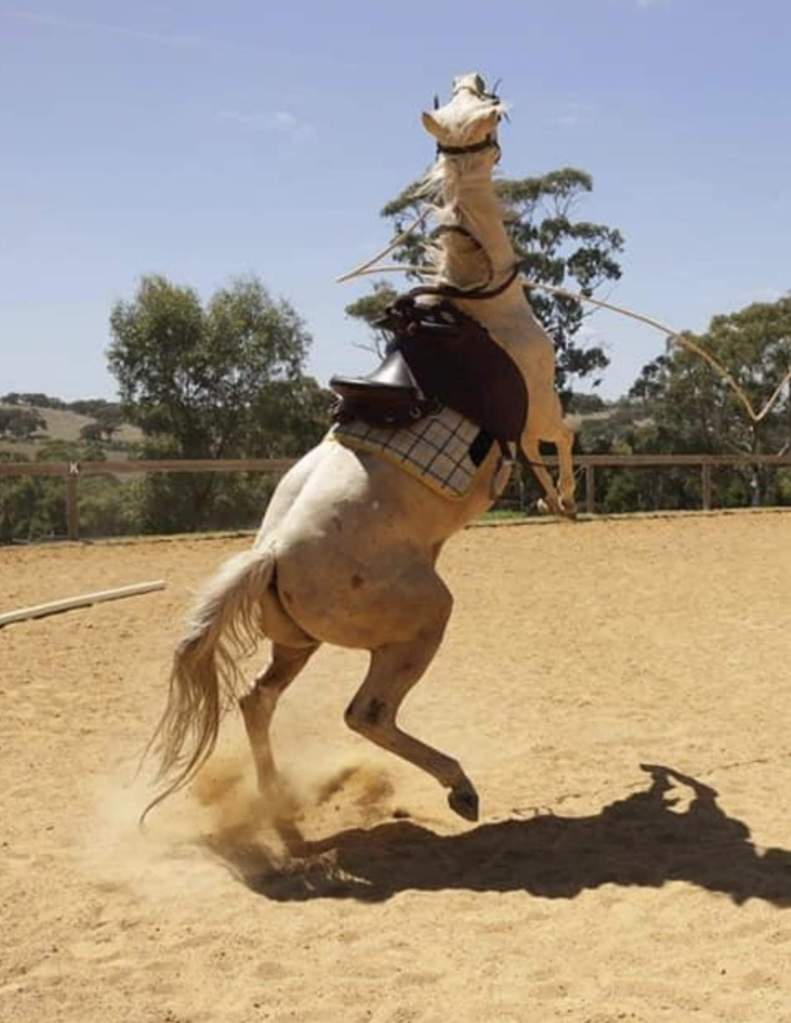
A very typical reaction to simply being asked to walk on while lunging, when he wanted to go in the other direction.

Longevity means nothing to the horse. Quality of life, everything.

Very, very early into working with him – not only was he deeply troubled with behavioural issues and holes in his basic training, but he would need a lot of work focused on improving his posture, strength and balance as he’d not had the chance to develop the correct muscle that he would need to stay comfortable.
First canters under saddle! Compare this with the image immediately prior, demonstrating the same point of the stride.
2020
Early 2021
Early 2021
What would be one of our best rides, but also the second to last ever ride together – early March 2021
14.02.2022 – demonstrating the significantly deteriorated proprioception resulting from his neurological decline.
Scoot was laid to rest Valentine’s Day 2022, on his favourite hill on the beautiful farm that has been his home for the past seven years.

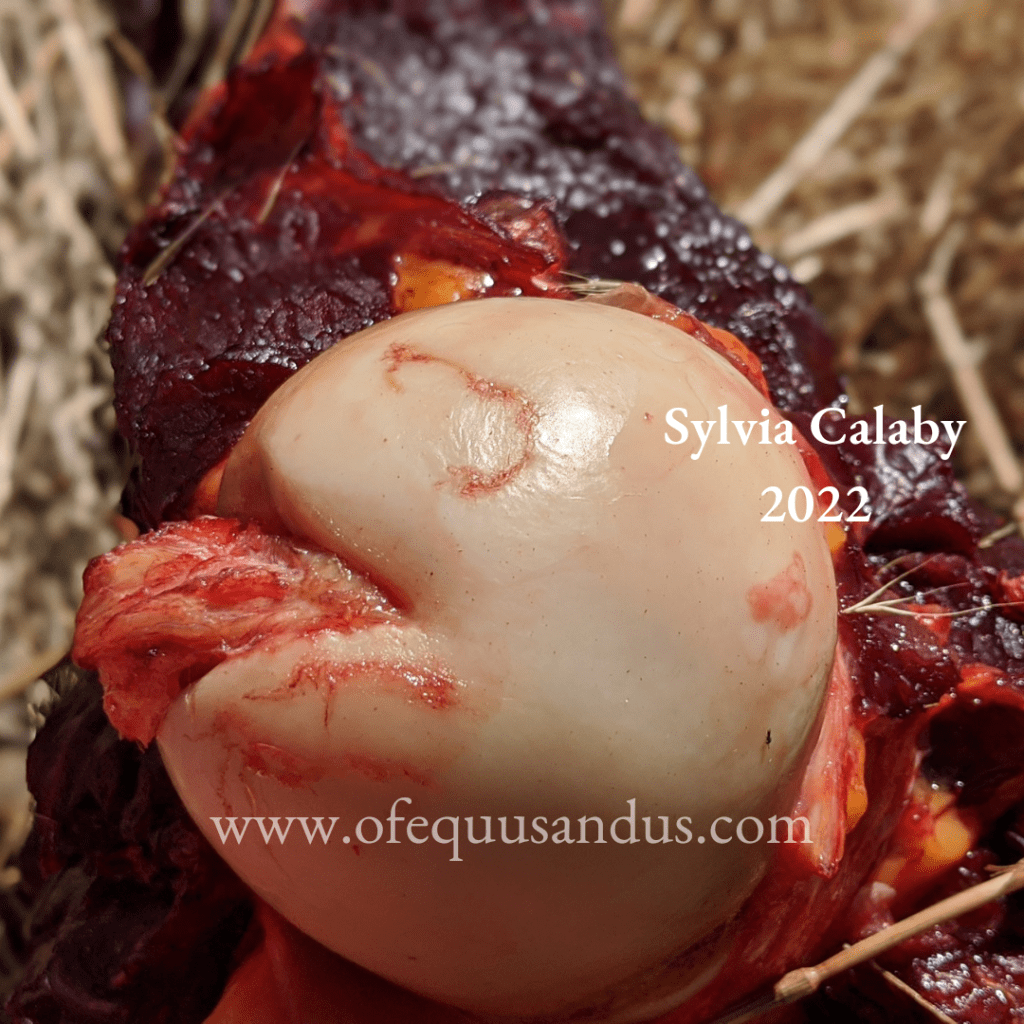
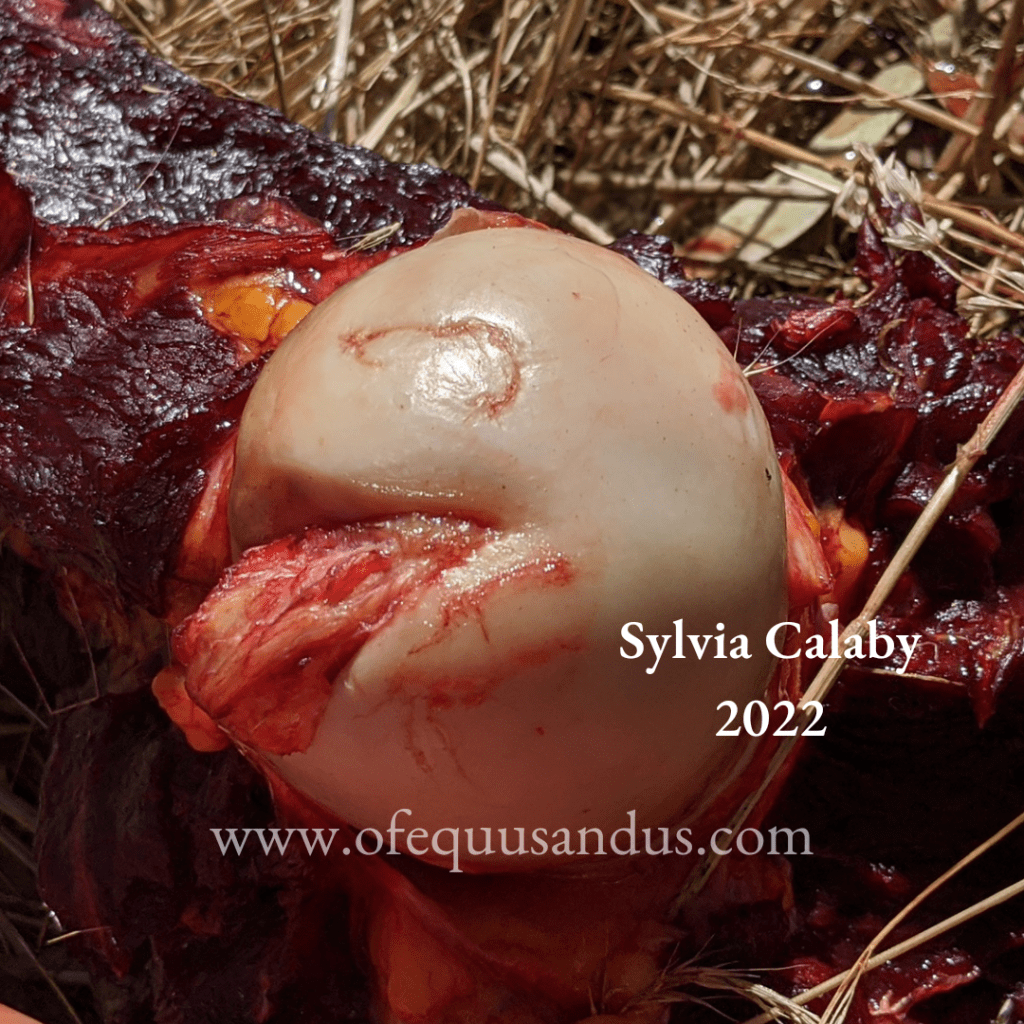
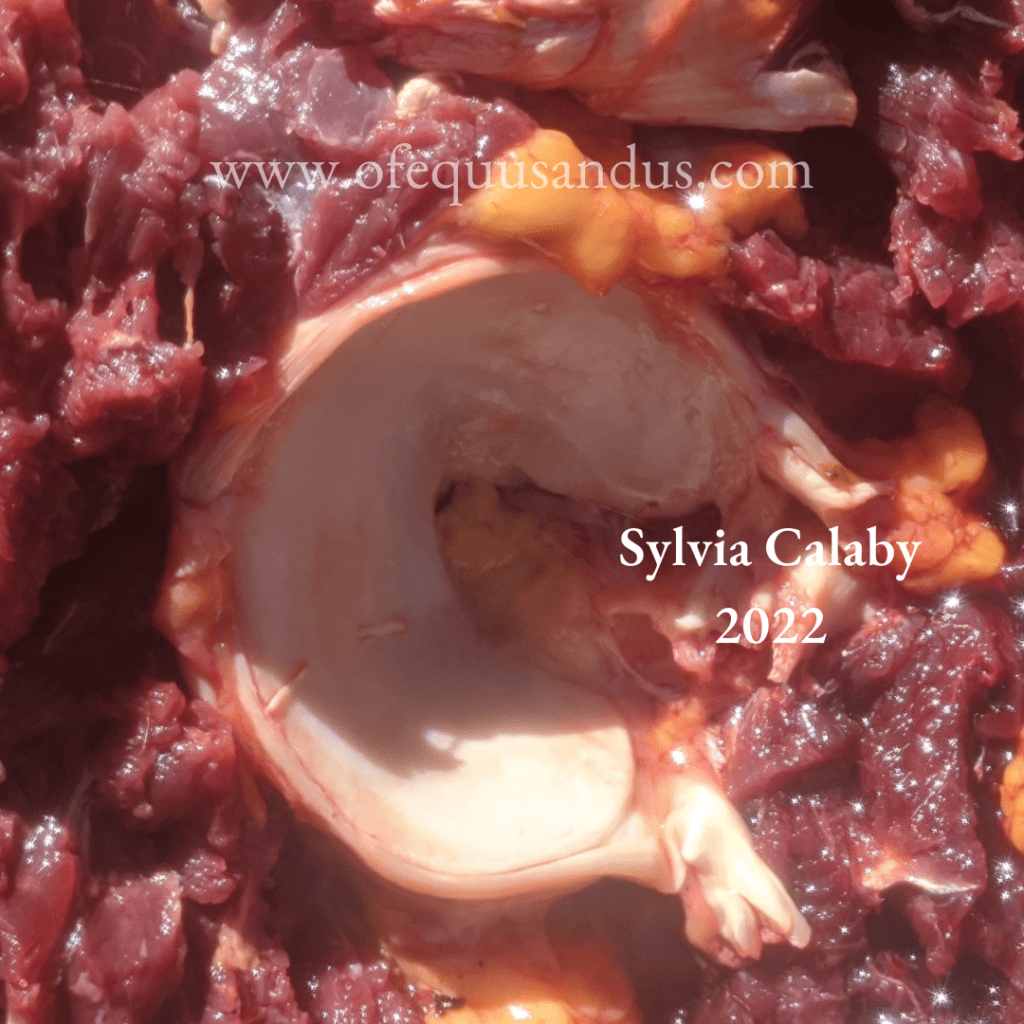
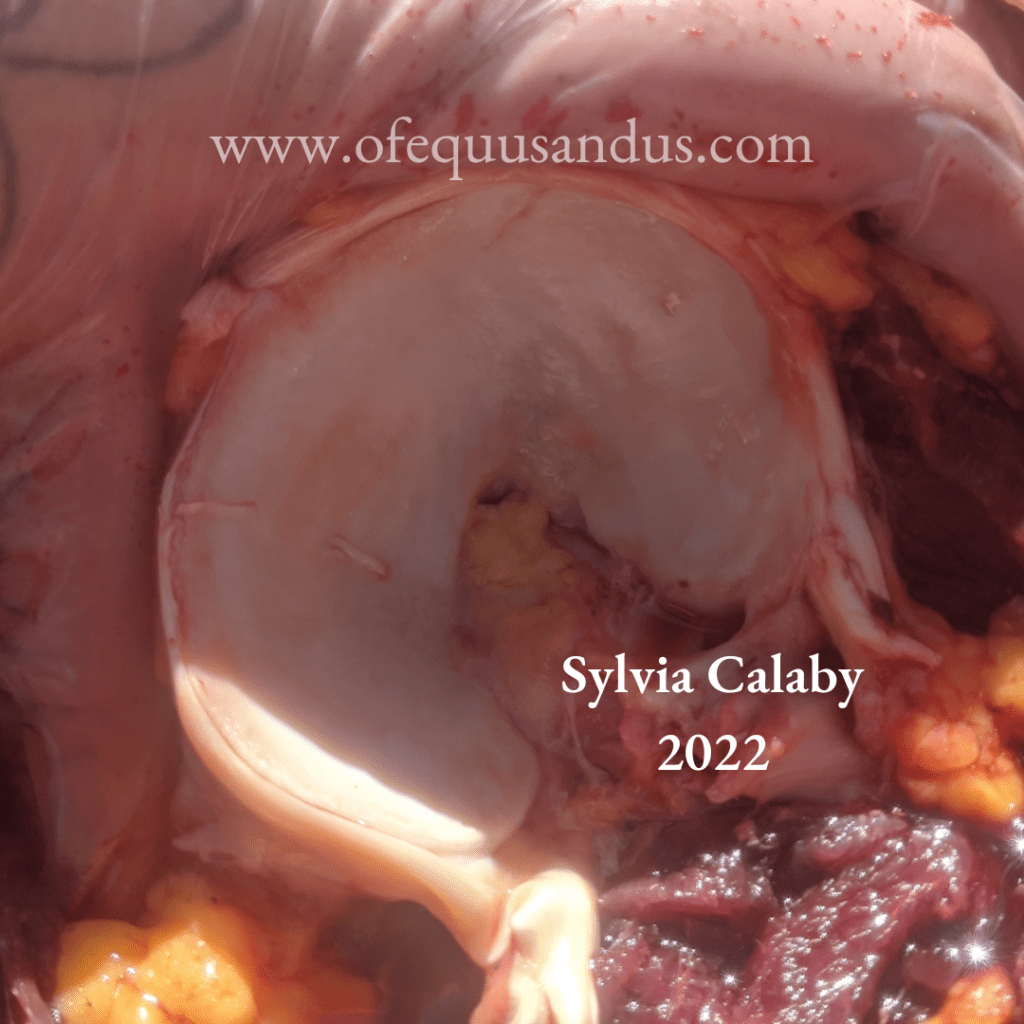
Scoot – Leg Joints

Post contains graphic post-mortem dissection images.

Scoot was not always a good boy. But he was always the very best boy that he could be.
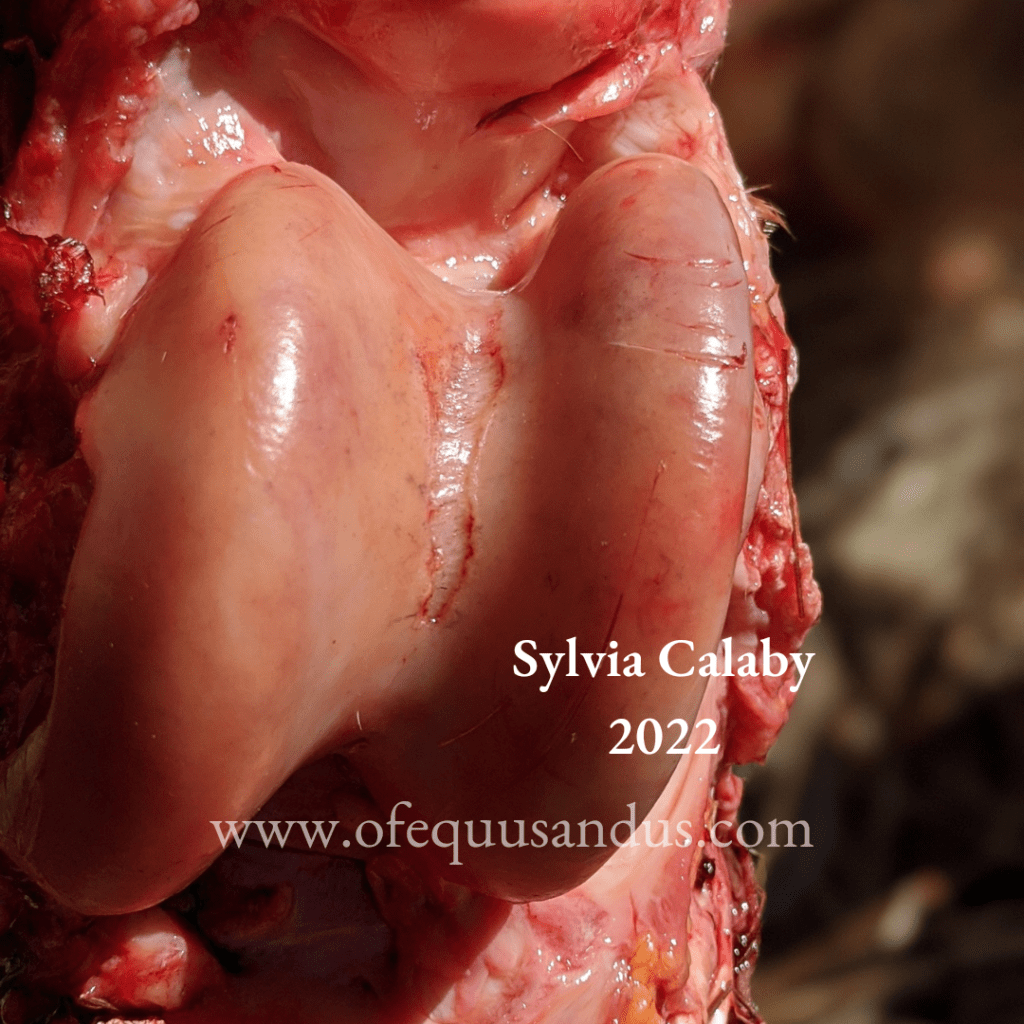
Scoot 2022 – hip joint of right hind leg.
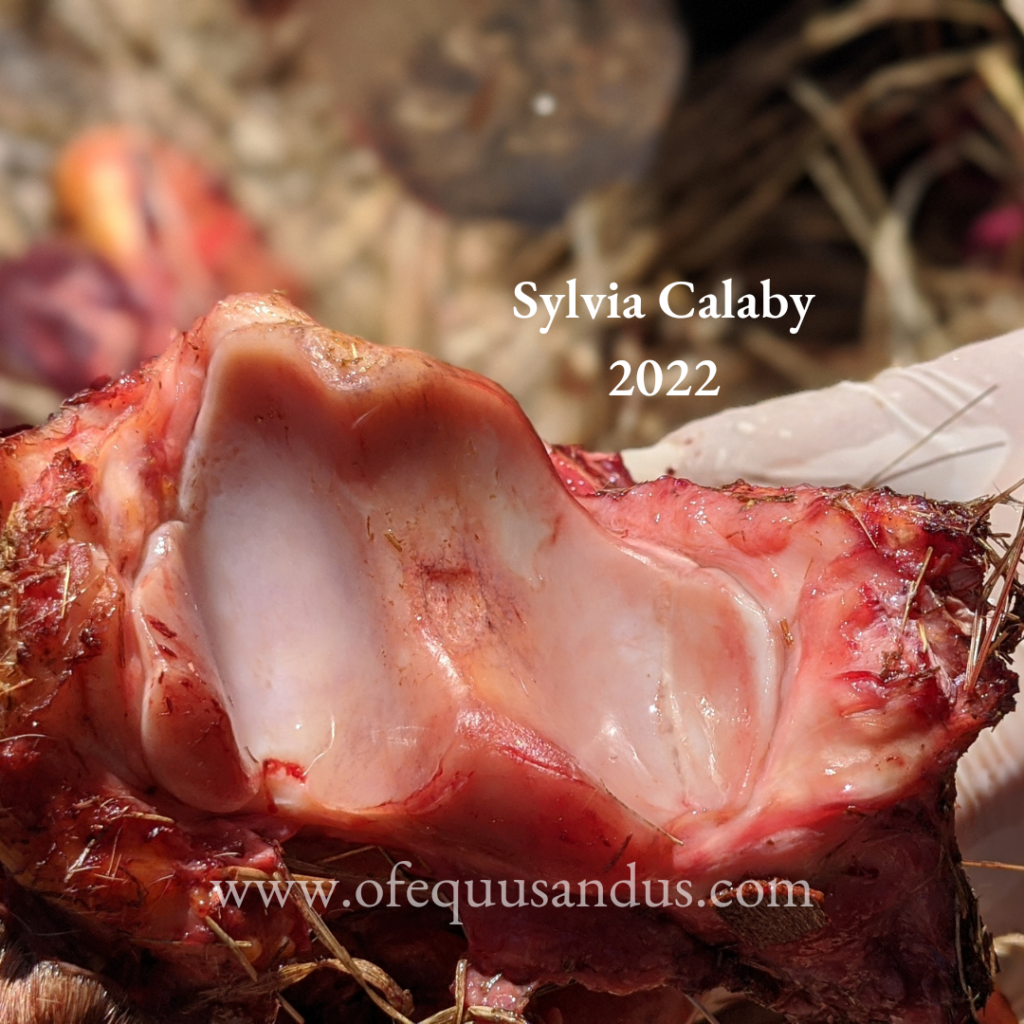
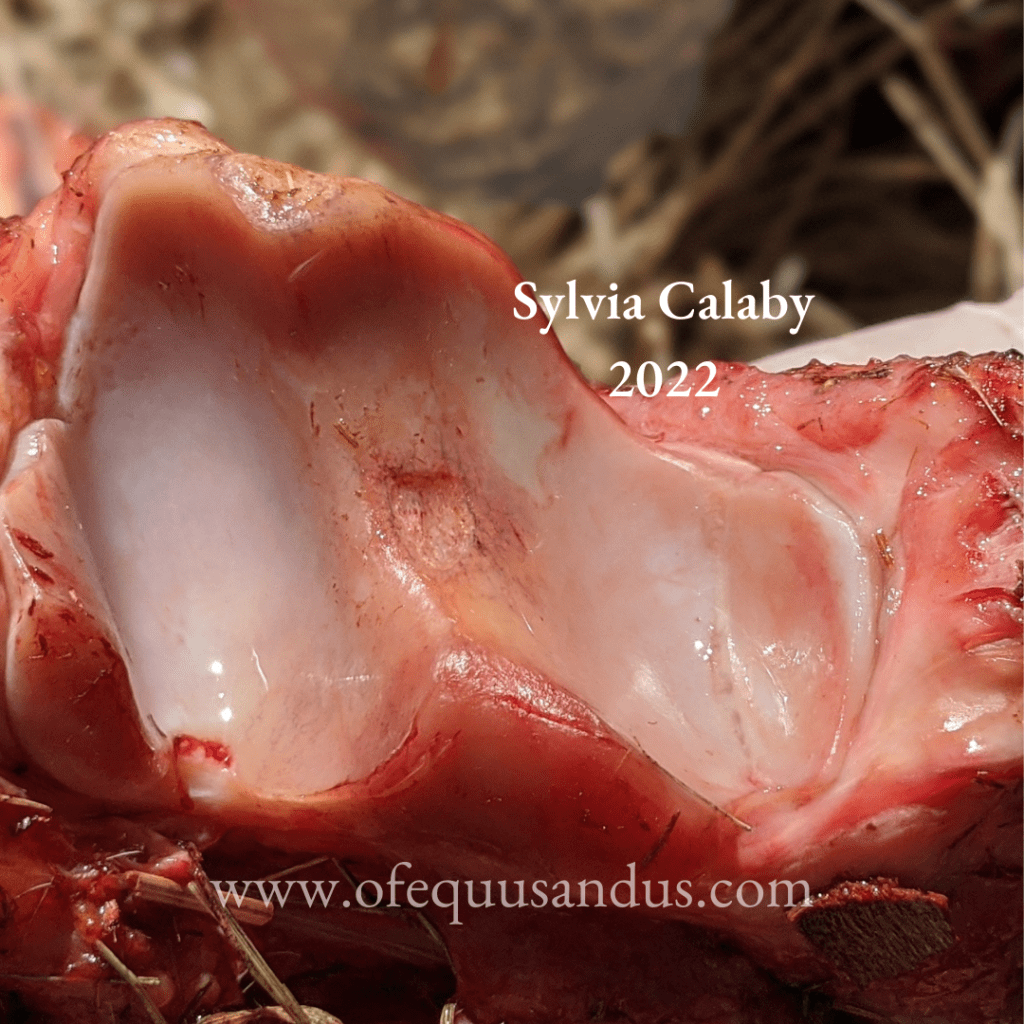
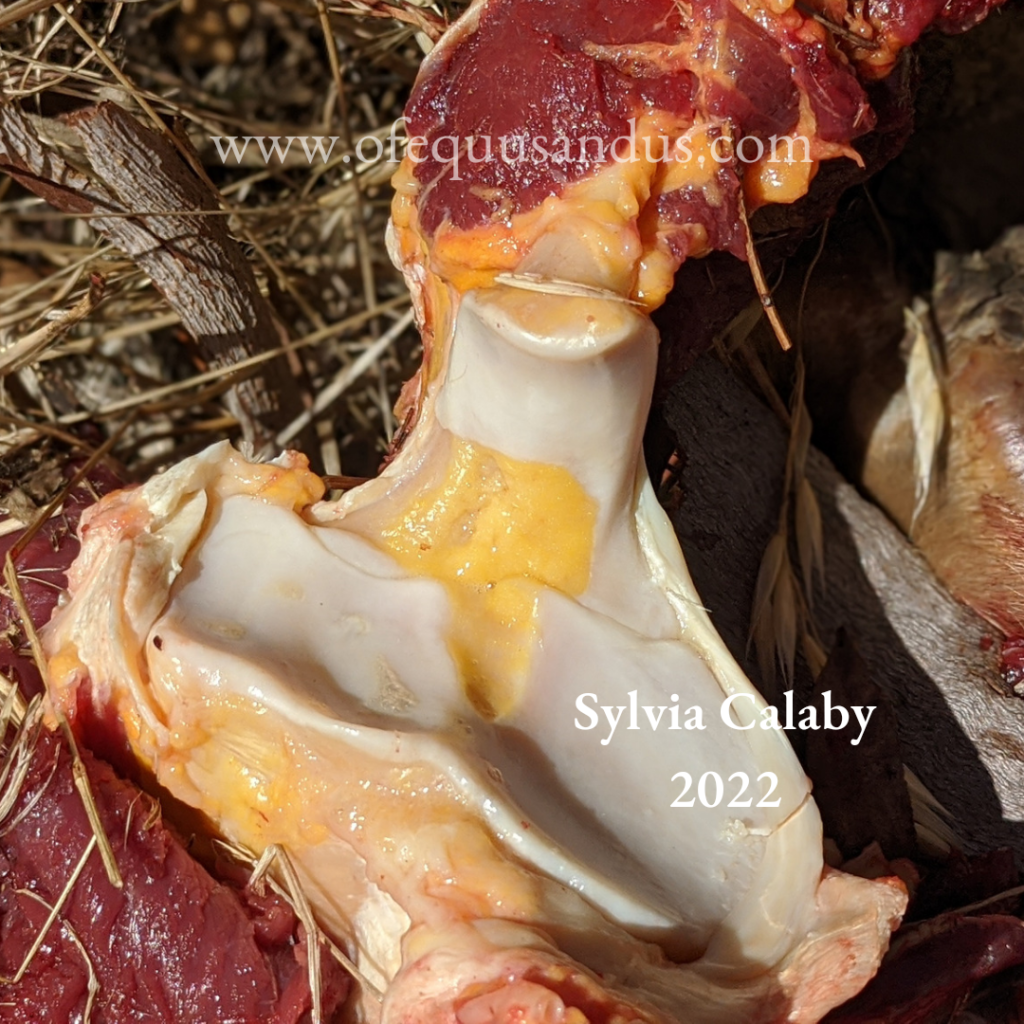
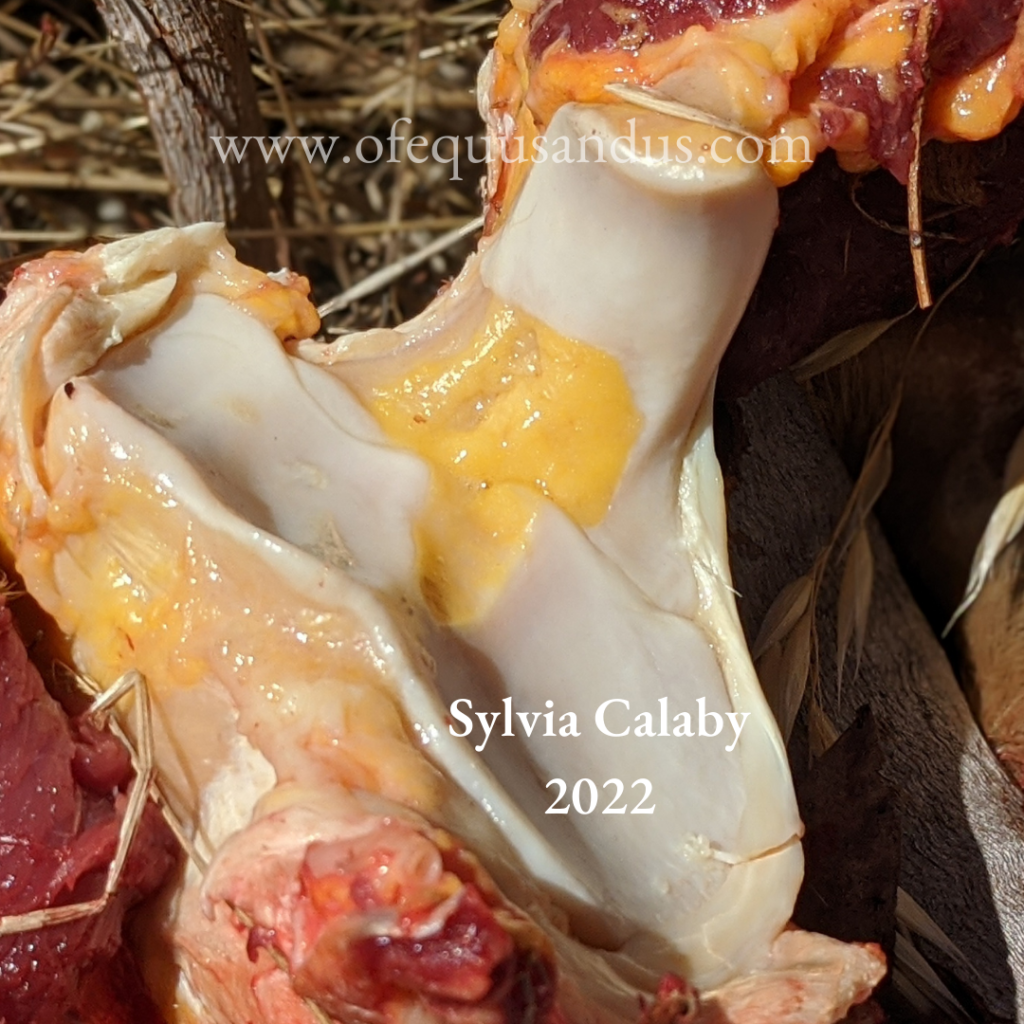
Scoot 2022 – hock joint of right hind leg.
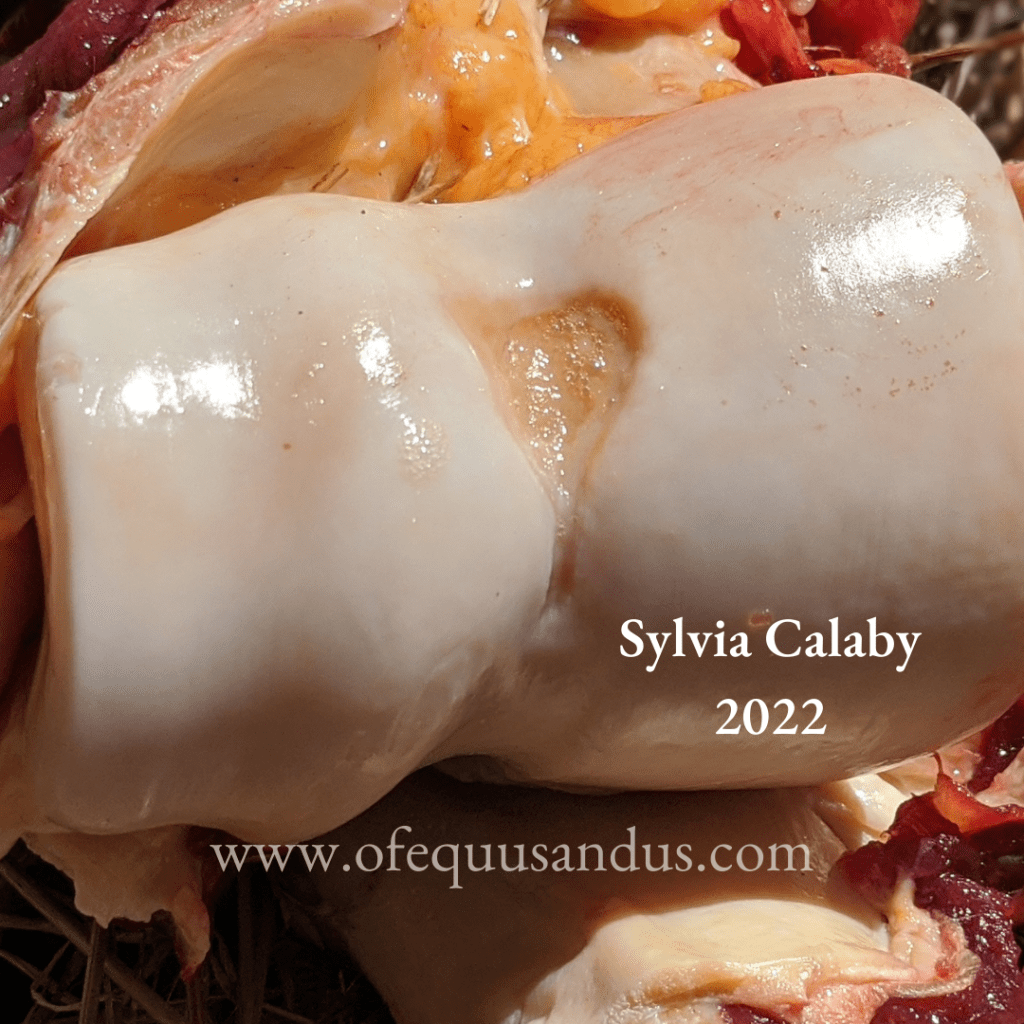
Scoot 2022 – elbow joint of right fore leg.

Rethinking Rope – why I choose to use flat headcollars

Please be aware that post contains graphic post-mortem photographs of the facial area that may be upsetting to some.

Early 2017, right before making the change to using flat head collars.
Scoot wearing his regular flat headcollar.
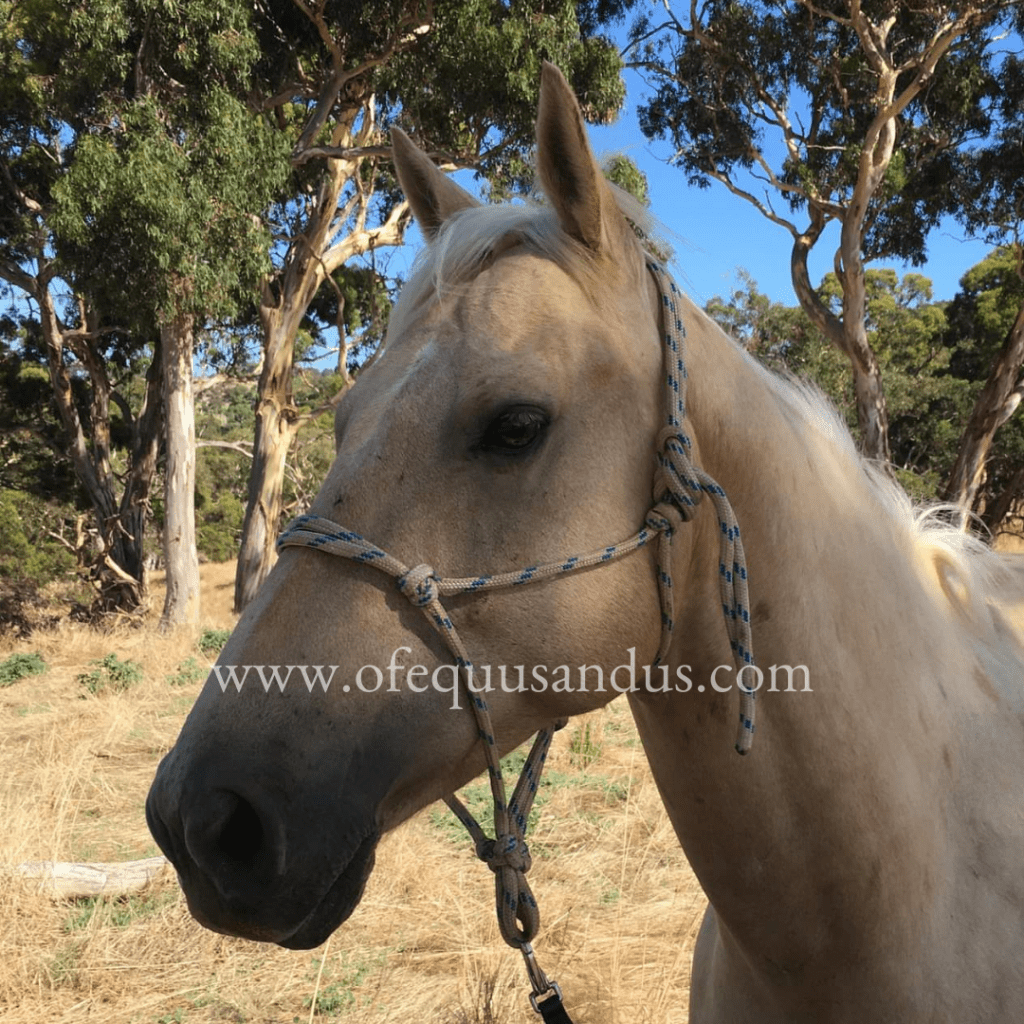
Scoot 14.02.2022 – photo by Zinta Rutins. I stopped using rope halters on my own horses in 2017 but put this one on him simply for demonstration purposes.
Jack 2021. Please note how small the “safe zone” actually is – the area between the cheekbone and the floating portion of the nasal bone. The small hole almost directly above the cheekbone is the infraorbital foramen, where the prominent rope-like infraorbital nerve bundle passes through the skull.
Scoot 2022 – scalpel indicates location of the infraorbital foramen, where this large rope-like nerve bundle passes into the skull. As you will see in later images, the infraorbital nerves are not only present in this area, but actually run the full length of the safe zone – where we can safely fit a halter or noseband without risking the horse’s fragile nasal bone, before branching out into the external nasal nerves. Horse’s nose is to right of image.
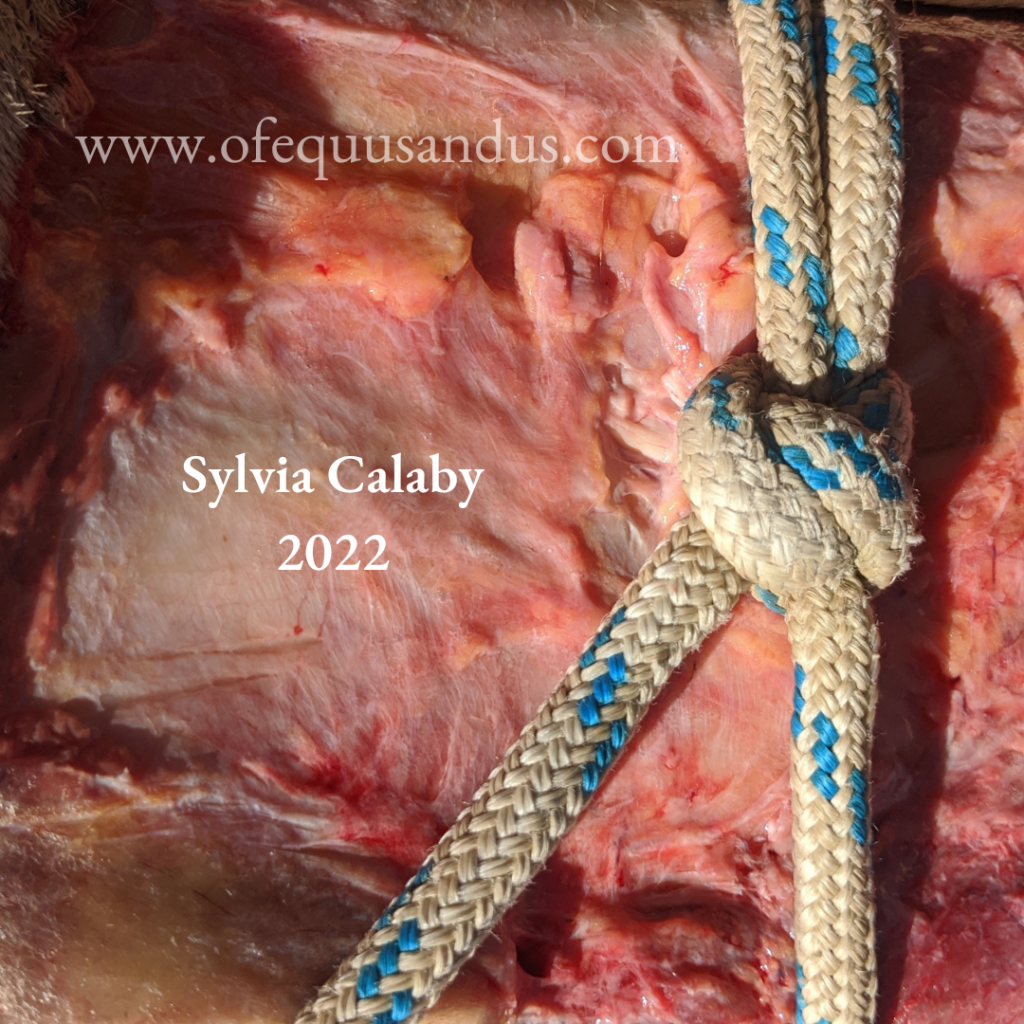
Scoot 2022 – halter had not been adjusted from earlier photo, as I wanted to accurately demonstrate how this halter knot sits. Horse’s nose is to right of image.
Scoot 2022. Horse’s nose is to right of image.
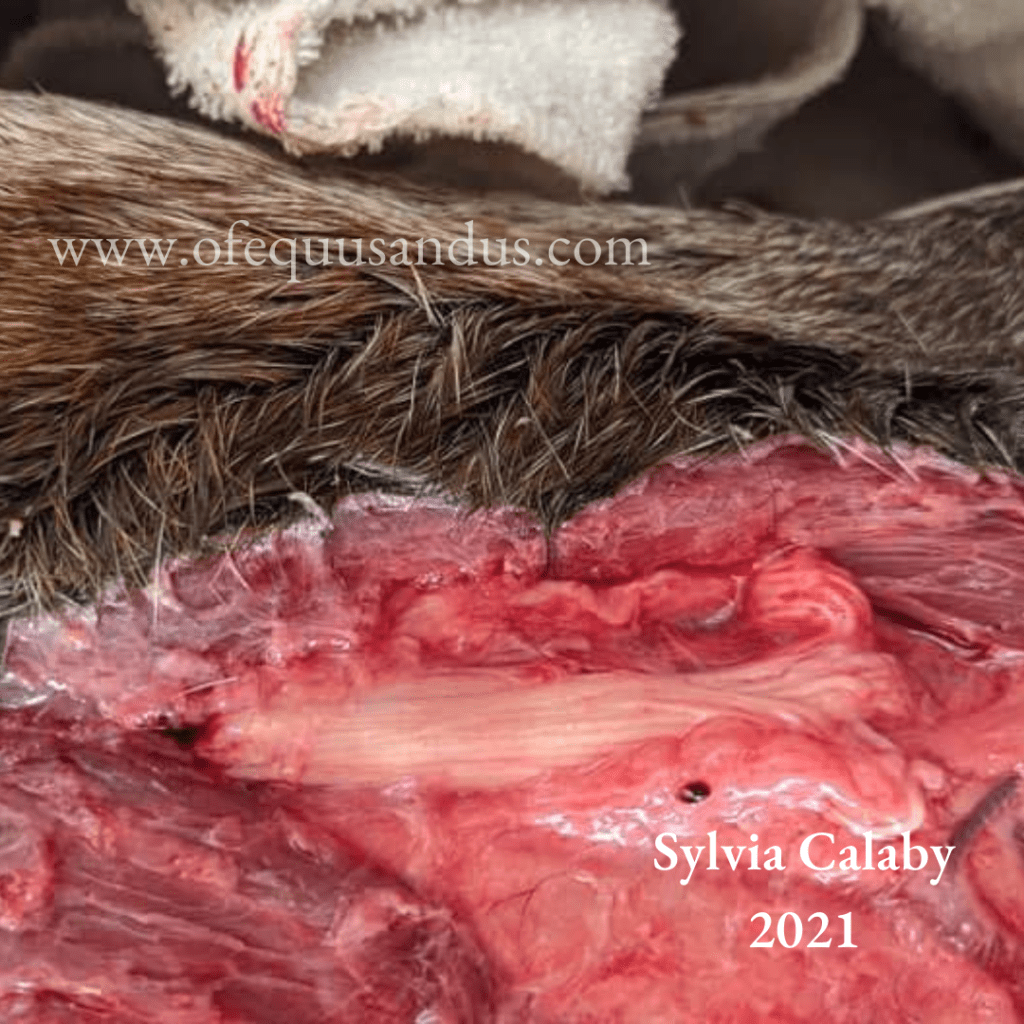
Kass 2021 – demonstrating how this nerve bundle is not only present at the infraorbital foramen (positioned at right end of nerves) but it actually runs across the whole of the “safe zone” between cheekbone and the start of the floating area of the nasal bone. Horse’s nose is the left of image.
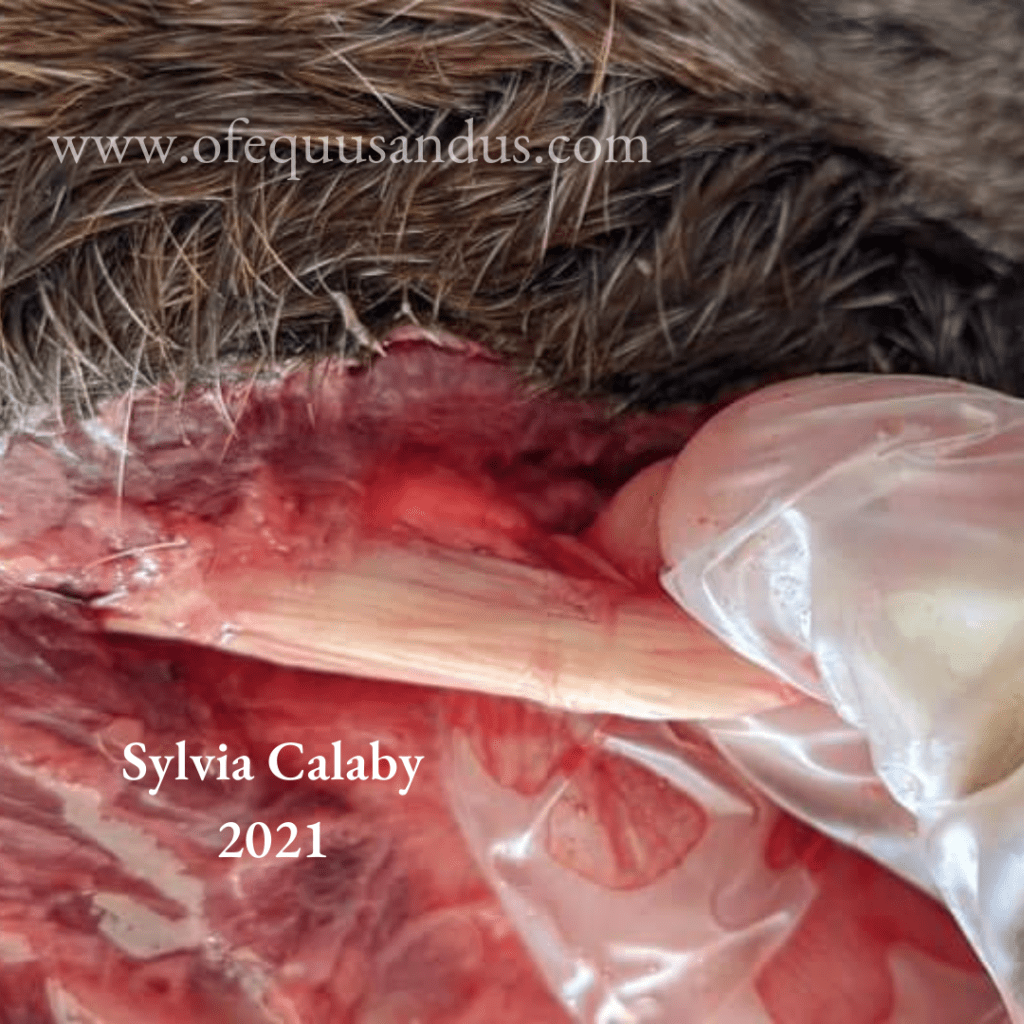
Kass 2021 – demonstrating the thickness and rope-like nature of the nerves in this area. Horse’s nose is to left of image.