Of Equus & Us is the passion project of a chronically ill and neurodivergent girl who fell in love with horses at a very young age, and never grew out of it.
There’s a great number of harmful stereotypes regarding autism, especially when it comes to autistic girls since so much of the research has focused on typical “male” presentation. For myself at least, the one stereotype of having an intense interest in animals, and preferring the company of animals over other people certainly rang true. Horses would come to be a much needed outlet as a neurodivergent person drowning in an intolerant neurotypical world; a safe zone where I could freely be my authentic self without repercussion. And as my own physical and psychological health declined, a curious trend of finding myself being drawn to similarly afflicted horses occurred.
It’s worth noting here for those unfamiliar with neurodivergence – in particular those with ADHD and/or Autism (ASD) (where both are present, AuDHD is often used as shorthand) – the intense passions of our special interests can lead us to a kind of self-directed learning far beyond what many could possibly imagine. But alongside this gift for being able to invest ourselves so deeply in our special interests, executive dysfunction wields an equally strong power over us – often preventing us from being able to perform even some of the most basic functions. Or as I like to phrase it – with AuDHD “we can do anything, but we cannot do everything“. Executive dysfunction is a powerful, powerful beast.
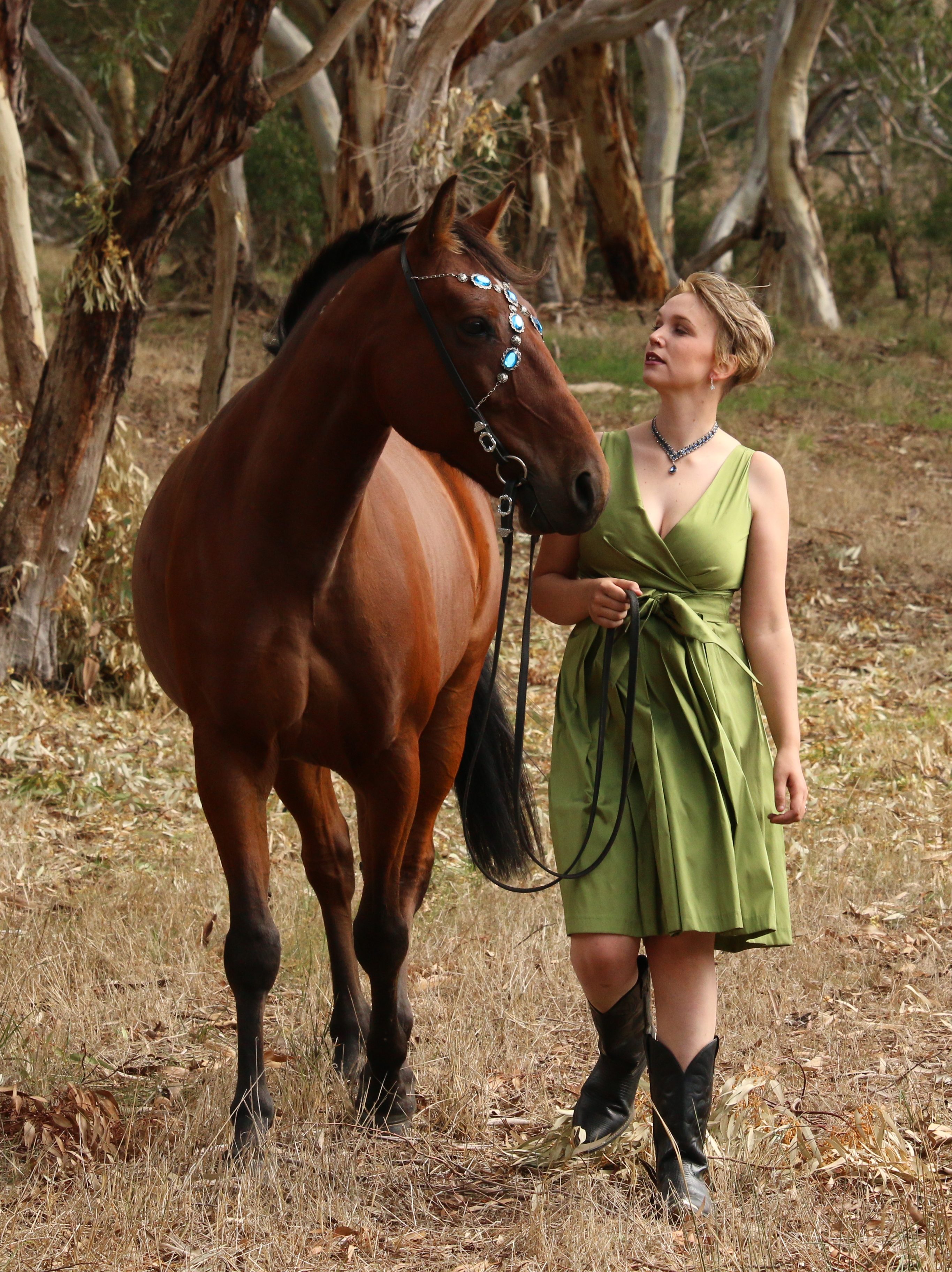
Growing up in Adelaide, horses were already my favourite but unfortunately regular riding lessons were out of our budget as a family – so as a young musician, I would busk in Rundle Mall with my harp to help pay for lessons and trail rides at Templewood Riding School when possible. Living near West Beach, we also regularly visited the horses at the River Torrens to appease my deep equine obsession.
In 2000, we moved to Meningie, a small country town in the Coorong region, and a year later finally began regular riding lessons at the age of 10yo with a local horsewoman. A year later, my sister and I leasing our first horse Monty “Montana Grace” – a teenaged Thoroughbred mare who’d had little formal retraining, but took excellent care of her riders. 2003 saw us moving again due to parents work placements, this time to Uraidla in the Adelaide Hills. 2003 would also see me meeting Seb – an older Thoroughbred gelding who tragically had broken down at only 2yo due to pedal osteitis and would ultimately be the catalyst for a life long obsession surrounding how hoofcare can impact the lifelong wellbeing of the horse.
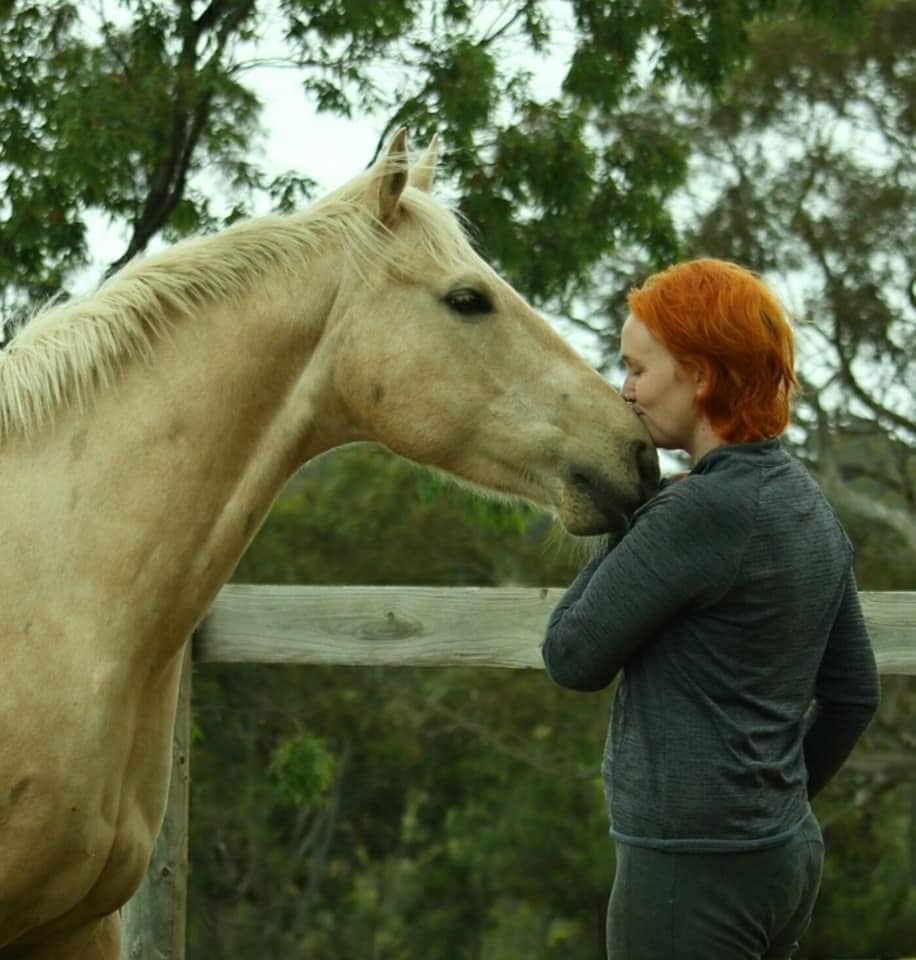
In 2004, we leased our second horse Dolly “Chalani Paper Doll” – a young Australian Stock Horse mare who was not being bred that season. When she was sold, we then leased Sheoak “Chalani Sheoak” – a legendary ASH mare who was the epitome of the Australian Stock Horse. Sheoak had been an incredibly successful show horse in her younger days, having won in ASH and English classes, as well as being an outstanding pony club mount eventing at Introductory level, and experienced broodmare. Immediately prior to our lease, she had also been on a working sheep station. A true schoolmaster, Sheoak could turn her hoof to any task her rider asked – and when we did show, we would always come home with multiple ribbons from jumping, to show hack, to mounted games.
Towards the end of 2005 when Sheoak’s lease ended, I would meet Cheeky “Cherokee” – an Australian Warmblood (Holsteiner x Thoroughbred) who would set in place the groundwork for the horsewoman that I would come to be. In late 2009, navicular syndrome set in – reigniting my deep passion for hoofcare that had initially been sparked by Seb years earlier. At the time, I was studying Applied Fashion Design & Technology – and while my autism gave me an incredible edge over others, especially when it came to 3D design and construction, I had quickly bored of the toxic nature of the industry and decided not to continue the following year, having already learned all of the construction side of things that the course had to offer.
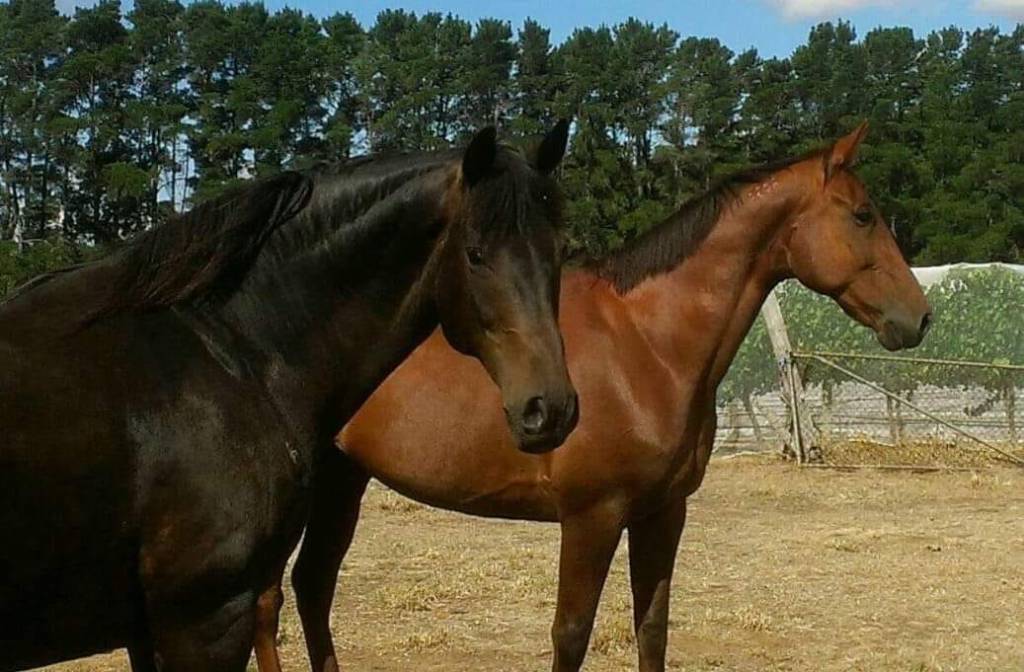
Around this time, barefoot trimming was beginning to become more mainstream and was showing good results rehabilitating some kinds of hoof pathology – including some navicular afflicted horses. In my research for treatment options for Cheeky’s soundness issues, I discovered that the Australian College of Equine Podiotherapy offered a Diploma course, with openings for their October intake of 2010, as well as offering an owner-trimmer weekend clinic a few months earlier. As someone with an aptitude for hands on tasks and mechanics, and having lit the passion of the hoofcare as my new Special Interest, I knew immediately that this was the right choice for me and promptly quit my Design course and signed up for hoofcare instead.
Around this time, my sister also moved interstate and took her horse Jack – leaving Cheeky bereft without his friend. Because of my neurodivergence, I’ve always been uncomfortable around many people, so instead of moving him to an equestrian centre with other horses present for company, I decided to find him a companion horse. Already being familiar with the standardbred breed, I decided that would be the right choice for an easy keeper companion horse, that might also suit light trail riding – at the time, I was studying on top of a full time office job, so riding was not much of a priority as I simply didn’t have time on top of caring for two horses. I placed an ad, and received a response fairly quickly “have a 5yo gelding, ticks all of your boxes”.
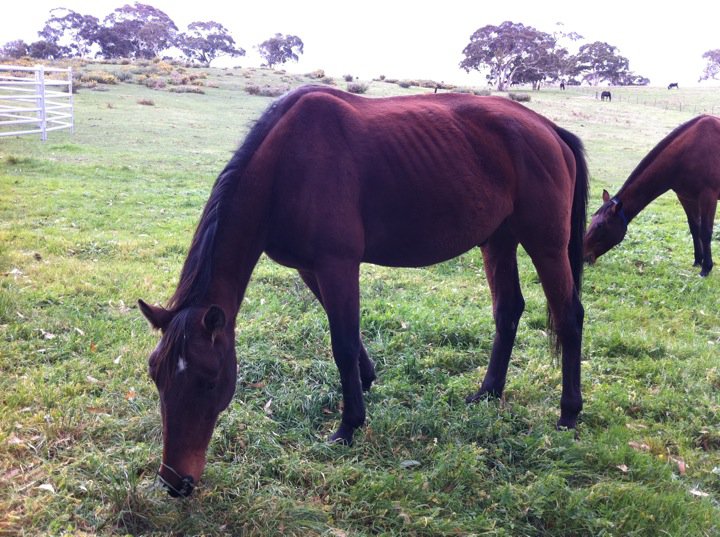
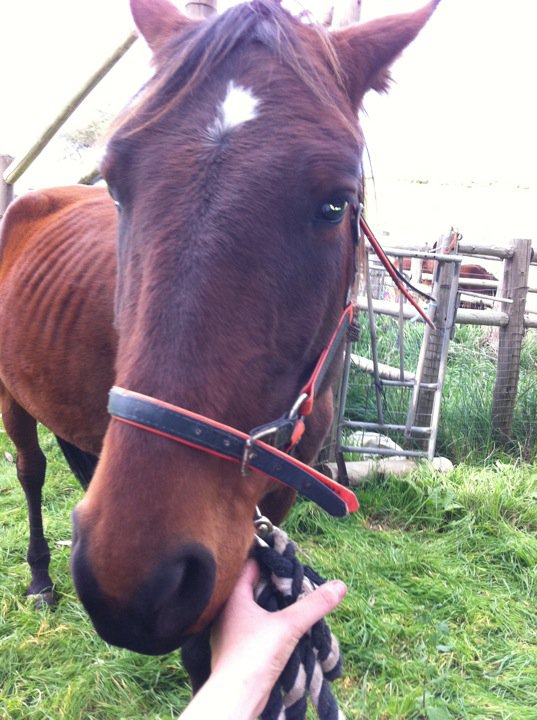
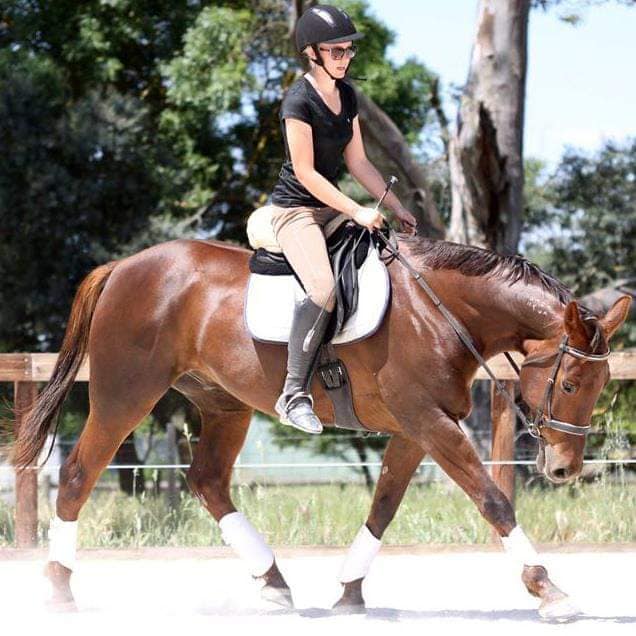
Charles had raced for two years as a pacer, then spelled a further two years after an injury. And now he was unable to keep weight on from grass alone, so it was time to move him on. This thin, fluffy horse sniffed me, and then gently pressed his face against my chest – an action that he would never repeat again, either. But that was it, he was coming home with me. Cheeky loved his new companion, and while I was used to green horses and Charles had at least been mouthed during his harness days, he would be the first horse I would back myself. Over time, I would bring him back to health, but he still carried some permanent soundness issues as a legacy of his racing days. Soon, I would also acquire Ollie, an incredibly talented horse despite his soundness challenges, who would be the first to push me into viewing the standardbred as a genuine performance horse prospect, rather than just a sensible but not particularly elegant trail and pleasure horse.
Chronic and mental health conditions are renowned for their “buy one, get 10 free” nature – rather than exist in a vacuum, the occurrence of one greatly increases the chances of additional comorbid conditions. For myself, this includes:
Klippel-Feil Syndrome (KFS)
Complex Regional Pain Syndrome (CRPS)
Hypermobile Ehlers Danlos Syndrome (hEDS)
Postural Orthostatic Tachycardia Syndrome (POTS)
Fibromyalgia
Endometriosis
Adenomyosis
Osteoarthritis
In addition to these, a number of psychological conditions including but not limited to:
Autism Spectrum Disorder, Level Two (ASD)
Attention Deficit Hyperactivity Disorder (ADHD)
Post Traumatic Stress Disorder, and Complex Post Traumatic Stress Disorder (PTSD, C-PTSD)
Major Depressive Disorder (MDD)
Generalised Anxiety Disorder (GAD)
It’s not a simple thing to manage horses and such significant health struggles, and one that also causes intense scrutiny and judgement when my health prevents me from working.
 Of Equus & Us